Estate Vision
A diverse, modern and sustainable rural community that creates a well-cared for healthy and economically self-sufficient rural estate where nature recovery, regenerative food production and well-being provide the focus. The landscape in which the community sits supports employment, and income is developed through the production of food, housing, sustainable tourism, land management and other local rural business, whilst being home to a diverse range of wildlife and habitats as we seek to encourage nature recovery and carbon sequestration.
Our Vision
ENVIRONMENTAL
- Increase self-sufficiency: water/food/energy/soil health
- Strong estate wide biodiversity at a landscape scale promoting nature recovery through all activity
- Protect, create and maintain priority habitats and species to enable nature recovery
- Embrace opportunities to deliver ecosystem services
SOCIAL/CULTURAL/ORGANISATIONAL
- Maintain, enhance and diversify recreation, sporting and leisure opportunities
- Provide employment through the estate’s activities
- Create a culture with which all people associated with the estate are proud
- Provide housing of high environmental and architectural standards to maintain the community fabric of the estate and parish
- Work with a range of partners at a local and national level to achieve the vision including, amongst others, the SDNPA, Plantlife, the Sustainable Food Trust and Action for Conservation
ECONOMIC
- Benefit from synergies of a multi enterprise estate e.g., sustainable farming and tourism; wildlife and access
- Meet local housing needs
- Explore sustainable development and other investment opportunities
- Each enterprise profitable in its own right for the long term with sufficient re-investment to remain resilient

Farming
Overall farming picture
The aim is to approach farming in Lavington in a regenerative agriculture organic system, adopting an agro-ecological approach. This will increase biodiversity and have ecosystem services at the forefront of how the farm produces food. The farming land is grassland and has provided ideal grazing and forage for horses over the years.
This grassland is nearly entirely ryegrass and, as a result, lacks biodiversity. A key focus is to increase biodiversity, by diversifying the grassland sward to a more flower rich habitat. Regenerative agriculture remains the overarching theme and is at the core of the farms vision. All of the livestock will be grass fed only, no cereal or concentrates will be used, and they will be managed sensitively to maximise welfare and to minimise environmental impact. They are a vital part of the management of the wood pasture and grassland. They will provide locally produced high quality nutritionally dense food products that have had a positive impact on the supply chain, the environment and the consumer.
Regenerative agriculture is an active, management-based system of farming which will be central to the running of the Lavington Estate and Stud. It protects soil life ensuring the environment can thrive within an agricultural system. It promotes and harnesses natural, and ecological processes instead of using synthetic inputs. To optimise plant, animal and human health, regenerative farming builds up soil organic matter to maintain a biologically active soil. Healthier soil will have a better capacity to hold water, cycle nutrients, provide habitat and be the best starting point of food production.
The farming principles and practices of regenerative agriculture are:
- Soil health and fertility.
- Increasing biodiversity (plants, animals and insects).
- Carbon sequestration (taking carbon out of the atmosphere and putting it back into the ground).
- High animal welfare.
- Improving water cycle.
- Increasing resilience to climate change.
The elimination of synthetic fertilisers, pesticides and imported livestock feed is also a key part of the vision with an aspiration to become organic in time. The physical farm features and enterprises operating on it will be interconnected and each enterprise will work together symbiotically providing habitats for increased biodiversity, high quality sustainably produced food, and a profitable business that supports the local economy providing employment opportunities.
Farming Enterprises
Dairy
A micro dairy will be established at our Hoyle farm depot in conjunction with Lavington. This will be an ethical calf at foot dairy where cows will raise their calves until they are ready to be weaned. This is unusual for a dairy herd as in conventional systems calves are separated from cows immediately upon calving to maximise milk yield. Keeping the calf at foot mimics what would happen in nature and is much more ethical and natural for both the cow and calf.
The cows will live in their natural environment, kept outdoors all-year round but provided with natural shelter (woodlands and low points in the land) for protection against extreme weather. The herd will be managed using rotational grazing to focus on pasture regeneration and carbon sequestration. They will be moved daily depending on pasture needs and could be up to four times a day to maximise the quality of feed the animals are eating.
The milk and other dairy products will be sold direct to local customers within the National Park. This approach to dairy farming and combined with the species rich forage the cows will consume will produce very high quality and healthy dairy products, far more so than is available in supermarkets.
Beef
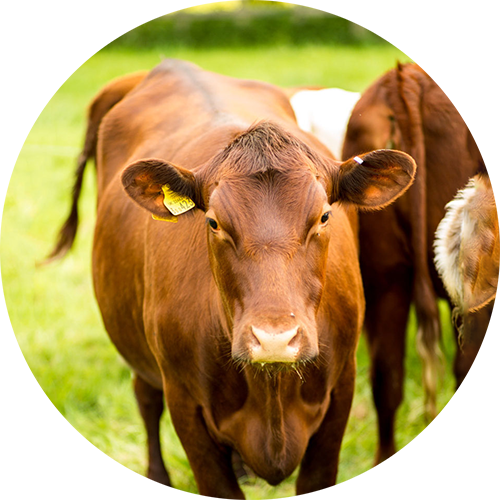
A native breed herd of Red Poll and Northern Shorthorn will be used to provide grazing for the wood-pasture, wetland and species rich grass areas and will be an essential management tool in order to maintain and enhance biodiversity and also produce a high quality locally reared products that will be sold in the local area. This sustainable approach to beef farming not only helps enhance the natural environment, but also provides the community with a sustainable, local source of quality red meat.
Sheep
A sheep enterprise will be established and will act as a grazing management tool for both the species rich grassland and the wood pasture. The way in which sheep graze is very complimentary to that of cattle as they graze much closer to the ground and thus are a fantastic tool for managing the grassland alongside the cattle in a system called mixed grazing.
Just like the cattle the sheep will be grass fed and will be an excellent source of local, sustainable red meat and wool.
Stud Farm
As Lavington Stud has such a rich heritage of breeding high quality racehorses. It is intended that the farm continues to run and operate as an equine working stud farm in keeping with the cultural values of the business and setting. This is likely to be specialist in approach.
Forestry and woodlands
Management
The estate owns a total of 113.3 ha (280 acres) of woodland made up of 101.2 ha of hanger woodland to the south of the estate made up of Graffham Down Woodland and Queen Elizabeth Forest on chalk and clay with flint soils. There is a further 12.1 ha of woodland largely comprised of ancient semi natural woodland at Lavington Stud on Upper Greensand and Gault Clay. There is a management plan for the main block of Graffham Down Woodland and Queen Elizabeth Forest due for review as the existing plan was developed by the previous owner and with 40% Ash within the woodland, serious consideration now needs to be given to the woodland health and management to diversify the species composition. The majority of the woodland is ancient semi natural woodland (ASNW) and planted ancient woodland (PAWS).
Tree and Woodland Creation
There is an ambition to increase woodland cover at Lavington, either through natural colonisation and/or planting. Work is being undertaken to assess where the best locations would be for nature recovery and landscape connecting and/or expanding existing woodland areas.

Conservation
Graffham Down Trust
To the western and southern end of the Hanger woodland of Graffham Forest is a conservation area, managed by The Graffham Down Trust
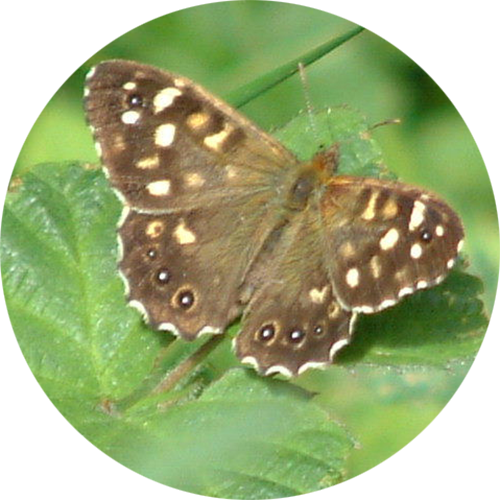
(https://graffhamdowntrust.co.uk/index.html) This community management group aims to preserve this rare, chalk downland area and focuses on butterfly conservation and provides multi-tiered habitats for insect life, including the Duke of Burgundy, Silver Washed Fritillary and Purple Emperor. There is also a good population of dormouse as well a wide variety of plant species including orchids, eyebright, hemp agrimony, vetches, trefoils, cowslip and a range of downland herbs. The group work closely with the South Downs National Park Authority Rangers who provide professional expertise as well as MIND who undertake restorative conservation volunteering. We will work with the Trust to provide permability for species into the estate and wider landscape.

Species
Barn Owl
The rough grass at Lavington provides an opportunity to assist with barn owl conservation due to the vole population which it supports, a ready source of food. There is a residential population of Barn Owl due to the habitat and further work such as creating extra nesting sites is underway. There is also a population of Tawny owl and little owl.
Bird Species
There is a diverse range of bird species at Lavington. With specific management to improve the woodlands, allow light and understory to develop with deer management, as well as further habitat enhancements of hedgerow and diversifying the grassland sward, it is hoped to increase abundance of birds and the diversity. Expertise will be sought either professionally or voluntarily. Records show that there were once Turtle Dove and Nightingale in the area and with the right management in place it is hoped that these species will return. Several amber and red listed birds have been recorded recently at Lavington including Bullfinch, Grey Partridge, Starling, Swift, House Martin, Grey Wagtail, Mistle Thrush and Song Thrush.
Mammal Species
Sussex Biodiversity records show that Hazel dormouse are located within the woodland area as well as more common mammal species. Records also show that 14 of the 18 native UK bat species have been recorded including Noctule, Barbastelle, Serotine, Myotis, Alcathoe, Bechstein, Brandt, Daubenton, Whiskered, Natterer, Pipistrelle, Long eared, Brown long eared, greater and lesser horseshoe.
Habitats
Veteran Trees and Trees
A number of veteran trees have been recorded on the Ancient Tree Inventory hosted by the Woodland Trust towards the old parkland area of what was once West Lavington estate bordering Seaford College. There are more on the estate which will be added to the inventory in due course. Trees are an important part of the landscape of Lavington, the aim is to increase the numbers of groups and individuals to provide succession to the older trees and continuity to the parkland/wood pasture feel to the estate as well as ameliorating buildings within the landscape.
Ponds and wetlands
There are a number of small ponds, although these are limited and small. These often correlate with interesting areas of wet grasslands and chalk spring streams and offer a real opportunity to enhance the landscape and biodiversity. A plan will be drawn up to pull these opportunities together and assess the viability and opportunity.
Grassland
Although the vast majority of grassland is semi improved and has been resown and adapted, there are areas where grasslands have been allowed to ‘rough up’ or have avoided improvement which show exceptionally good structure and diversity. Most of these interesting grassland areas are associated with wetlands and provide an insight into what could be achieved at Lavington in low lying areas. Free draining alkaline and neutral ph. areas offer a real opportunity for creating diverse swards of species rich wildflower dominated grasslands.
Hedgerows
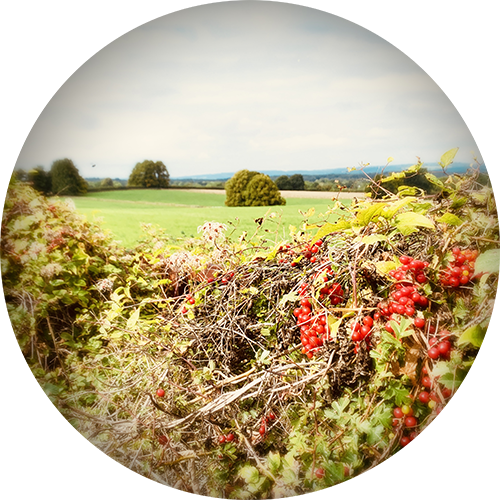
There are around 4.83 miles/7.77 kilometers of hedgerows and wooded boundary on the estate, which are managed for wildlife, shelter for livestock and landscape. There are plans to increase the length of hedgerows linking other habitat and making wildlife corridors. The estate aims to encourage a thick bottom in its hedgerows giving them plenty of room and cuts all its hedges with in-house staff to ensure quality and the progression of the majority of hedgerows to an “A” or bulky shape and structure as good practice.
Environmental Stewardship
The estate is committed to the Higher Tier Stewardship as a mechanism to provide support to deliver the overall ambition of nature recovery as well as other grant funding opportunities, either private or public to support its objectives. The scheme will deliver an ambition plan of restoring 144.5 ha containing creation and restoration of woodland pasture, recreation of species rich grassland and extensive field tree planting over the next 10 years.
Deer stalking and management
Deer management is an important part of land management across the area and the estate sits in an area where the deer population is extremely high and is having a negative impact on biodiversity, especially woodland flora and tree regeneration. A deer strategy is being developed along with local stalkers to ensure good practice is achieved through a management plan. There is an ambition to bring venison to the local and regional market by using established game dealers but also seeking development of linking produce into the South Downs Deer Management Group hosted by local managers, the Forestry Commission and the South Downs National Park Authority. The western South Downs high population of fallow deer and maintaining high quality and healthy Roe deer population within the holding capacity of the landscape is critical. Deer numbers will be assessed regularly by qualified stalkers, where numbers can be safely and successfully culled then stalking is offered to paying clients who are supervised by estate representatives.
Equine
The history of Lavington Stud is linked directly to its success in producing high-class racehorses. The location of the stud has provided a perfect area for breeding horses due to its spring water, sheltered environment and good grazing. The intention is to continue to operate a low input operation of breeding horses due to the suitability of the ground and cultural link of the land holding.
Public Access
Public Access
There is an extensive network of rights of way, which are extremely popular with locals and visitors alike. They offer car free easy access for villagers of Graffham to a wider network, circular routes as well access to local facilities such as the village school, Seaford College, the recreation ground and the South Downs Way. There is a range of footpaths around the Lavington and then through the forest a range of restricted byways and bridleways. The total rights of way on the estate are 10.68 miles/17.18 kilometers.
Properties
Commercial lets
The redundant buildings at Lavington offer an opportunity to consider their viability not only for land management use, but also for commercial lets. The priority will be given to businesses that complement the ethos of Lavington Estate. We will either look to provide office facilities to local people and/or a mixture of lets for artisan local business and workshops. There is a high demand for both locally.
Residential lets
The range of properties provide important rural housing at a range of budgets and provision, which is valuable both to the community and the estate. This range of residential dwellings at Lavington Estate provides a very significant challenge in maintaining upkeep and improving EPC ratings to comply with standards and align with the ethos of low carbon living. In total there are 13 rental properties ranging from a 5-bedroom house to a single bedroom cottage.
There is planning for change of use of Calloways Yard for 10 new dwellings.
The plan is to bring all the properties up to modern standards, rent the properties to people living and working locally and to approach the development of Calloways in a different manner. This could potentially mean reducing the number of planned new dwellings at Calloways, while at the same time seeking planning permission to build a principal farmhouse on the estate in another location.
Farm and Equine Buildings
A number of buildings on the estate require attention and consideration for their continued use and future demands in terms of the long-term vision for Lavington. Buildings will be retained where possible with thought given to zoning of areas and practical farming activity.
Archaeology
A significant earthworks has been recorded at Lavington Estate and dialogue is being sought with the district archeologist, and conservation steps through stewardship. The aim is to understand more about the feature believed to be an on stream industrial workings, possibly for cannon ball manufacturing.

People
Estate staff
There is a small number of estate workers, an estate secretary and a tenant farmer with the owners being actively involved.
Employment
The aim is to employ as locally as possible for key trades such as traditional land management, building, estate works and restoring the buildings as well as suppliers of materials and other services to practice the ethos of circular economy.
Partnerships
The estate is keen to develop strategic and practical working relationships to achieve the vision at Lavington. These include local, regional and national organisations. We are forming close working relationships with Plantlife and the Sustainable Food Trust who are keen to work with us as we begin our journey and set out our plan. We have also local working relationships with Natural England, the South Downs National Park Authority and the Forestry Commission.
